

Understanding the Importance of Posture Correction
What Is Posture Correction?
Posture correction involves aligning the body's parts to their natural position whether standing, sitting, or lying down. It focuses on maintaining the spine's natural curves and balanced muscle support to avoid strain and misalignment.
How Posture Affects Daily Movement and Health
Good posture supports smooth, pain-free movement and efficient muscle function. Poor posture can cause pain, soreness, stiffness, and limit daily activities by stressing muscles, joints, and nerves. These effects may lead to discomfort in the neck, back, shoulders, and hips.
Posture's Role in Musculoskeletal Well-being
Proper posture reduces wear and tear on bones and joints, preventing issues like arthritis and muscle weakness. It also enhances balance, flexibility, and breathing, promoting overall wellness. Corrective posture exercises and mindful habits help support musculoskeletal health, reduce injury risk, and improve functional independence.
Key Facts About Posture Correction and Support
- Posture correction involves maintaining the natural spinal curves and proper alignment of head, shoulders, and hips.
- Core strength is fundamental for supporting the spine, preserving natural curves, and reducing slouching and postural habits.
- Common muscle tightness caused by poor posture occurs in the chest, hip flexors, and neck; targeted stretching alleviates tension.
- Changing positions every 15-30 minutes and incorporating movement helps distribute load and prevents musculoskeletal discomfort.
- An ergonomic workspace with proper chair support, monitor height, and foot placement improves posture and reduces strain.
- Physical therapy addresses muscle imbalances and provides personalized exercises for sustainable posture correction.
- The five main types of posture are neutral, kyphotic, lordotic, flat back, and forward head postures, each affecting health differently.
- Achieving better posture involves strategies like spinal alignment, muscle engagement, ergonomic habits, and professional assistance.
- It is possible to permanently fix poor posture through consistent strengthening, stretching, ergonomic setup, and mindfulness.
- Effective methods for posture correction include muscle strengthening, stretching, manual therapy, ergonomic adjustments, and movement awareness.
1. Align Your Spine: Embrace Neutral Posture for Optimal Balance
What is posture correction?
Posture correction involves maintaining the natural curves of the spine—at the neck, mid-back, and lower back—while ensuring proper alignment of the head, shoulders, and hips. This alignment helps prevent musculoskeletal misalignment, reduces the risk of pain and injury, and improves overall body function. It incorporates mindful posture during daily activities, Proper sitting position, and proper ergonomic adjustments.
Maintaining the natural curves of the spine
Maintaining natural spine curves: a slight forward curve at the neck (cervical lordosis), a backward curve at the mid-back (thoracic kyphosis), and another forward curve at the lower back (lumbar lordosis). These curves distribute mechanical stress evenly and enable efficient movement while minimizing muscle fatigue and strain.
Correct alignment of head, shoulders, and hips
Proper posture keeps the head balanced directly over the shoulders without leaning forward, which reduces neck strain. Shoulders should be relaxed and drawn slightly back to avoid rounding, while hips remain neutral with the pelvis neither tilted forward nor backward excessively. This coordinated alignment supports the spine's curves and helps maintain balance. For detailed guidance, see the Proper posture basics.
Proper standing and sitting positions
When standing, keep your feet shoulder-width apart with weight evenly distributed mainly on the balls of the feet. Pull in your stomach to engage core muscles, hold shoulders back, and keep the head level. While sitting, ensure your feet rest flat or on a footrest, hips and knees form approximately 90-degree angles, and a supportive chair maintains the natural lumbar curve. Take frequent breaks to change positions and avoid Tips to avoid prolonged static postures.
Adopting and maintaining a neutral spine posture through these strategies not only reduces discomfort but also fosters improved breathing, circulation, and overall wellness.
2. Strengthen Core Muscles to Support the Spine and Enhance Stability
What role does core strength play in improving posture?
Core strength is fundamental for maintaining good posture by supporting the spine and pelvis. It helps preserve the natural S-shaped curves of the spine, ensuring Proper body alignment during all activities, whether standing, sitting, or moving. A strong core enhances stability, which reduces the tendency to slouch or adopt poor postural habits. It also improves body awareness and balance, minimizing the risk of injury and musculoskeletal strain.
Core exercises for posture improvement
Several targeted exercises effectively strengthen the core muscles critical for postural support:
- Planks: Engage the deep abdominal muscles and the back to build endurance and spinal support.
- Superman exercises: Focus on strengthening the lower back and core, helping to maintain proper lumbar alignment.
- Side planks: Develop the lateral core muscles and glutes, which are important for stabilizing the pelvis and preventing imbalances.
For more detailed exercises like these, check out 12 Exercises to Improve Your Posture.
Benefits of core strength for spinal support
Strengthened core muscles act as a natural brace for the spine, reducing stress on vertebrae and surrounding joints. This support lowers the risk of back pain and injuries caused by poor posture or repetitive strain. Additionally, a solid core improves balance and coordination, making everyday movements easier and more efficient while promoting a confident and upright stance. For additional insights, see the Importance of Core and Back Strength.
3. Stretch Tight Muscles to Release Tension and Restore Balance

Which Muscle Areas Commonly Become Tight Due to Poor Posture?
Poor posture often causes muscle tightness in specific areas such as the chest, hip flexors, and neck. Tight chest muscles lead to rounded shoulders and forward head posture, while tight hip flexors contribute to an anterior pelvic tilt. Neck muscles can become strained and tight due to forward head positioning, resulting in discomfort and misalignment. For more information on Common posture problems and Causes of poor posture, visit these resources.
What Are Some Effective Stretching Techniques to Address These Tight Areas?
Targeted stretches help release muscle tension and restore balance:
- Chest Openers: Standing in a doorway or corner, placing hands on the wall, and gently leaning forward to stretch the pectoral muscles counteracts shoulder rounding. Learn more about Chest Opening Exercises and Pectoral muscle stretching.
- Hip Flexor Stretches: Lunging forward with one leg, keeping the back leg extended, helps stretch the hip flexors and prevents pelvis tilt. See Ways to Improve Your Posture.
- Neck Stretches: Slow lateral neck bends and chin tuck exercises reduce strain and improve neck posture. For detailed guidance, refer to Chin tuck exercises and neck stretches and Physical therapy for posture correction.
How Long Should Each Stretch Be Held for Safe and Effective Results?
Stretch each tight muscle group gently, holding the stretch for 15 to 30 seconds. Avoid bouncing or forcing any stretch to prevent injury. Consistent, mindful stretching encourages flexibility and reduces muscle imbalances that impair posture. For more details on How to stretch properly and Stretching techniques for posture see these resources.
What Are Effective Posture Correction Exercises Used in Physical Therapy?
Physical therapy uses a combination of strengthening and stretching exercises focused on muscle imbalances. Stretching exercises like chest openers, hip flexor stretches, and neck stretches alleviate tightness and improve flexibility. Strengthening weak muscles complements stretching to support proper alignment and lasting postural improvements. Explore 6 Best Physical Therapy Posture Exercises, Posture Correction Exercises, and Physical therapy for posture correction for comprehensive exercise plans.
4. Practice Mindful Positioning and Regular Movement to Avoid Static Postures
Why Is It Important to Change Positions Frequently?
Maintaining the same posture for prolonged periods can increase muscle fatigue, stiffness, and joint strain. Over time, this static positioning contributes to discomfort and can negatively impact muscle balance and spinal alignment. Changing positions helps distribute the load more evenly across different muscles and joints, reducing the risk of pain and injury. For more on Maintaining Good Posture Throughout the Day, see resources on Posture Maintenance Strategies.
How Often Should You Check and Adjust Your Posture?
Experts recommend checking your posture at least every 15 minutes to ensure proper alignment. Movement breaks every 30 minutes are advised to relieve muscular tension and improve circulation. These frequent adjustments prevent muscles from becoming stiff and joints from becoming immobile. This aligns well with Posture check recommendations and Importance of breaks to reduce stiffness.
What Happens If You Sit or Stand Too Long in One Position?
Prolonged sitting or standing without breaks leads to muscle fatigue, decreased flexibility, and nervous system irritation. This can manifest as soreness, stiffness, and increased susceptibility to musculoskeletal issues like back and neck pain. Regular movement supports muscle endurance and joint health, maintaining an active, pain-free lifestyle. For advice on Sitting posture advice and Standing posture tips, see related Posture correction strategies.
Tips to Incorporate Movement and Position Awareness
- Set reminders every 15-30 minutes to stand, stretch, or change posture.
- Use ergonomic equipment to support neutral spine positioning.
- When sitting, keep feet flat on the floor, back supported, and shoulders relaxed.
- When standing, distribute weight evenly with feet hip-width apart.
Prioritizing mindful positioning and frequent movement creates a foundation for sustained good posture and overall well-being. Explore recommendations on Maintaining natural spine curves and Avoiding prolonged sitting. Additional guidance on proper ergonomic adjustments and Postural awareness may also be helpful.
5. Incorporate Ergonomic Adjustments and Postural Awareness Tools
How Can Adjusting Your Workspace Setup Improve Posture?
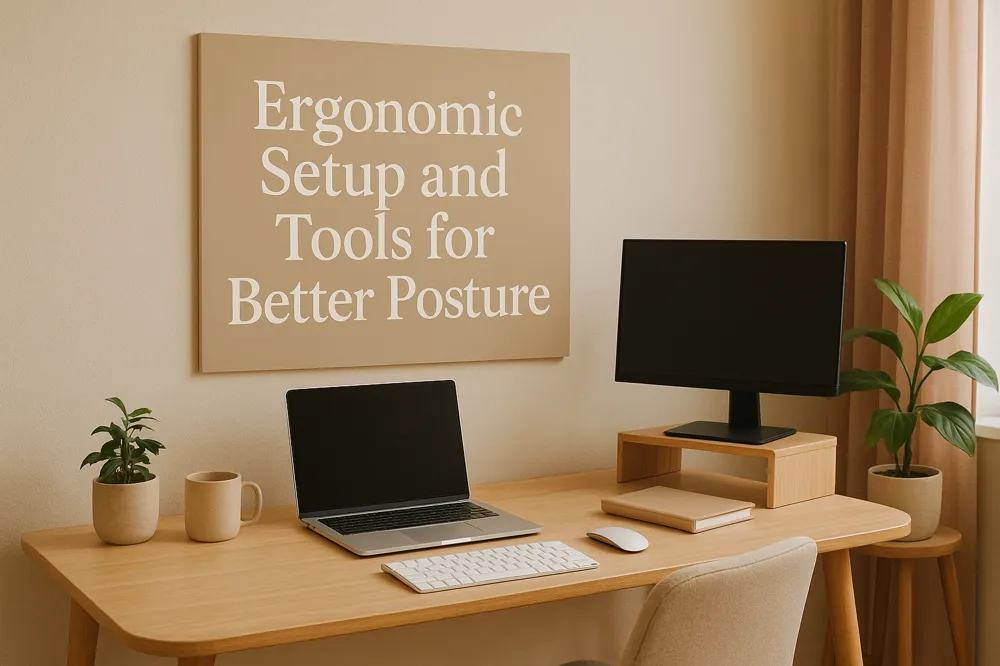
An ergonomic workspace is crucial for maintaining Proper posture basics throughout the day. Proper chair support helps maintain the Causes of poor posture, especially the lower back. Adjust your chair so your feet rest flat on the floor or on a footrest, with knees at about a 90-degree angle. Monitor height should be set so that the top of the screen is at or slightly below eye level to avoid neck strain and forward head position. Positioning your feet evenly helps distribute weight and supports balance, reducing fatigue and risk of poor alignment.
Are Posture Correctors Safe and Effective for Daily Use?
posture correction can be effective when used as tools to increase awareness of posture throughout the day. They act as gentle reminders to maintain proper alignment but should not replace a comprehensive approach involving muscle strengthening and flexibility exercises. Over-reliance on posture braces without targeted muscle conditioning may weaken supporting muscles over time. Consulting a healthcare professional ensures the safe, intentional use of posture correctors as part of a balanced posture improvement plan.
How Can Physical Therapy Help Correct Poor Posture?
physical therapy for poor posture plays a fundamental role in identifying and addressing the root causes of poor posture, such as muscle imbalances and joint restrictions. Therapists develop personalized treatment plans that include specific 6 Best Physical Therapy Posture Exercises for weak areas like the core, back, hips, and shoulders. manual therapy techniques release tight muscles and improve joint mobility. Therapists also provide education on proper ergonomic adjustments setups and movement strategies to prevent pain and encourage lasting posture improvement. This comprehensive approach supports sustained posture correction and overall well-being.
What are the five main types of posture?
Understanding the Five Main Types of Posture
Posture describes how we hold our bodies while standing, sitting, or moving. There are five primary types of posture commonly identified by health professionals:
- Neutral posture: This is the ideal alignment, where the natural curves of the spine are maintained without exaggerated rounding or arching. The ears align over the shoulders, shoulders over hips, and hips over knees.
- Kyphotic posture: Characterized by an excessive outward curvature of the upper back, often seen as a hunched or rounded upper back.
- Lordotic posture: This involves an exaggerated inward curve of the lower back, creating a swayback appearance.
- Flat back posture: The natural curves of the spine are reduced, making the back appear flat.
- Forward head posture: The head protrudes forward from the neutral alignment, commonly linked to prolonged smartphone use or computer work.
These postural types can affect both physical and mental health. Physically, poor posture may cause muscle strain, joint pain, decreased flexibility, and nerve issues. Mentally, posture influences mood and confidence levels, as standing tall encourages positive energy and self-esteem.
Common causes of poor postural alignment include sedentary lifestyles and habitual use of devices like smartphones, which promote forward head posture and rounded shoulders. To prevent such complications, adopting mindful habits, regular movement, ergonomic adjustments, and seeking guidance from physical therapists can be highly effective.
What are the key steps to achieve better posture?
Spine Alignment and Muscle Engagement
Maintaining proper posture basics starts with keeping the Maintaining natural spinal curves intact—gentle forward curve at the neck, backward curve at mid-back, and forward curve at the lower back. Engage core muscles, including the abdominals, back, hips, and pelvic floor, to stabilize the spine. Keep your feet shoulder-width apart with weight balanced on the balls of your feet when standing. Tuck the chin slightly to align the head over the shoulders, and pull shoulder blades gently back and down. Activating these key muscle groups regularly strengthens support for the spine and helps prevent imbalances.
Ergonomic Habits and Footwear
Ergonomic adjustments are essential in daily life. When sitting, keep feet flat on the floor or supported by a footrest, maintain a 90-degree angle between hips and knees, and support your lower back and hips properly. Set work surfaces and screens at comfortable heights to avoid hunching or craning your neck. Wearing well-fitted, supportive footwear helps maintain proper body alignment and reduces compensatory strain in muscles and joints.
Importance of Gradual Correction and Professional Assistance
Improving posture is a gradual process. Regular movement—Posture check recommendations] and Taking regular breaks for posture]—prevents fatigue and maintains alignment. Stretching tight muscles for 15 to 30 seconds and strengthening weak muscles like the shoulders, upper back, core, hips, and legs enhances postural support. Consulting a physical therapist can provide personalized exercises and manual therapy techniques to address individual posture challenges effectively, leading to reduced pain, improved balance, and enhanced overall well-being.
How can you improve posture quickly, for example in 7 days?
Daily mindfulness and ergonomic adjustments
Improving your posture swiftly starts with becoming aware of how you hold your body throughout the day. Check your alignment regularly, especially during prolonged activities like sitting at a desk. Setting a timer to remind yourself every 15 minutes to adjust your posture, such as keeping your head aligned over your shoulders and feet flat on the floor, can help. For more detailed strategies, see Posture check recommendations, Proper sitting position, and proper ergonomic adjustments.
Optimizing your workspace ergonomics is crucial. Ensure your chair supports the natural curvature of your spine, position your monitor at eye level to avoid forward head posture, and keep feet supported on the floor or a footrest. These simple changes reduce strain and encourage proper alignment. Refer to Sitting posture advice and Smartphone posture tips for more guidance.
Targeted exercises like yoga, tai chi, and core strengthening
Engage in exercises that strengthen core muscles—those in your abdomen, back, hips, and pelvis—as they provide crucial support for your spine. Incorporate stretches that open the chest and shoulders to counteract daily slouching. Poses such as Child’s Pose, Cat-Cow, and standing chest openers not only improve flexibility but also promote spinal mobility.
Practices like yoga and tai chi enhance body awareness, balance, and posture by combining strengthening and stretching movements, which can be beneficial when practiced consistently. See Yoga for Better Posture and Stretching Exercises for Posture for comprehensive routines.
Limitations and realistic expectations
While you can notice initial posture improvements in about a week with dedicated effort, correcting postural habits and muscle imbalances fully requires ongoing commitment. Muscle strengthening and flexibility gains take time to develop, and deep-rooted postural issues might need guidance from a physical therapist. For professional advice, check Posture Correction Tips and Role of physical therapy in posture.
Remember, consistent movement throughout the day and avoiding long static postures complement your exercise routine and ergonomic efforts for optimal results. See Maintaining good posture through movement and Taking regular breaks for posture for practical advice.
Is it possible to permanently fix poor posture?
Can posture be permanently fixed?
Yes, permanent improvement in posture is possible through a combination of consistent practices.
What does it take to improve posture long-term?
- Strengthening muscles for better posture: Regularly strengthening weak muscles, especially those in the shoulders, upper back, core, hips, and legs, helps support the spine and improves alignment.
- Stretching techniques for posture: Stretching tight areas like the chest, hip flexors, and neck reduces muscle imbalances that cause poor posture.
- proper ergonomic adjustments: Setting up workstations correctly (chair support, screen height, foot placement) and using supportive furniture promotes proper posture throughout the day.
- mindfulness for posture: Mindfully checking and adjusting posture every 15 minutes, avoiding prolonged static positions by moving every 30 minutes.
How effective are exercises and supportive positions?
Corrective exercises such as chin tucks, scapular retractions, planks, and thoracic extensions have been shown to realign posture and relieve tension. Proper sleeping positions with pillow support also prevent strain. Over time, these efforts retrain muscles and habits, leading to lasting posture improvements even in the presence of age or injury-related challenges.
Maintaining a commitment to these strategies is essential for sustainable, permanent posture correction.
What are the best methods for posture correction?
Effective Methods for Posture Correction
Correcting posture involves a blend of approaches that address muscle balance, joint mobility, and daily habits. Targeted strengthening muscles for better posture exercises focus on the core, back, hips, and shoulder muscles to support proper spinal alignment. Stretching techniques for posture—especially the chest, hips, and neck—improve flexibility and correct imbalances that contribute to poor posture.
Manual therapy, including techniques like massage, helps release muscular tension and improve range of motion, complementing exercise efforts. Specialized movement therapies such as the Alexander Technique and Rolfing promote better body awareness and efficient movement patterns, which are valuable for long-term postural health.
Ergonomic adjustments at workstations or during daily activities, like setting screen heights and using lumbar supports, reduce strain and encourage neutral posture positioning. Frequent position changes and posture check recommendations every 15 minutes prevent stiffness and reinforce good habits.
Together, these methods create a comprehensive strategy for sustainable posture correction that can reduce pain, enhance mobility, and support overall well-being.
Commit to These Posture Corrections for Better Movement and Wellness
Essential Posture Corrections to Practice
Maintaining proper posture involves keeping the spine's natural curves aligned, shoulders back, head level, and core engaged whether standing, sitting, or lying down.
Incorporate exercises that strengthen your shoulders, upper back, Core, hips, and legs while stretching tight muscles like the chest and hip flexors to balance muscle imbalances.
Adopt mindful positioning habits such as chin tucks and scapular retractions, and monitor your posture regularly, ideally every 15 minutes.
Value of Consistency and Professional Support
Consistent practice of posture exercises and frequent movement breaks prevent stiffness, reduce pain, and enhance musculoskeletal health.
Consulting physical therapists provides tailored guidance, helping address specific imbalances and develop effective correction programs.
Be Proactive in Daily Posture Care
Make proactive posture care a part of daily living by setting reminders to adjust your position, optimizing workstations ergonomically, and integrating posture-friendly exercises into your routine.
Such commitment reduces discomfort, boosts confidence, and supports long-term wellness through improved movement and reduced injury risk.