

Why Smartphone Neck Matters
When the head tilts forward, the weight of an average 11‑pound adult head creates a lever effect that dramatically amplifies cervical load—about 27 lb at 15° and up to 50 lb at 45°. This overload quickly leads to stiff neck, tension‑type headaches that start at the skull base, shoulder rolling, and occasional arm tingling. If left unaddressed, the repetitive strain can evolve into chronic neck pain, disc degeneration, and nerve irritation. An evidence‑based strategy combines ergonomic changes (screen at eye level, lumbar‑supported chair), micro‑breaks (20‑20‑20 rule), and targeted rehab drills—chin tucks, scapular retractions, wall angels, and thoracic extensions—to strengthen deep neck flexors, stretch tight anterior muscles, and restore thoracic mobility. Consistent daily practice, guided by a physical‑therapy professional, has been shown to reduce forward‑head angle and pain intensity within weeks, preventing long‑term musculoskeletal complications.
1. Understanding the Mechanics of Smartphone Neck
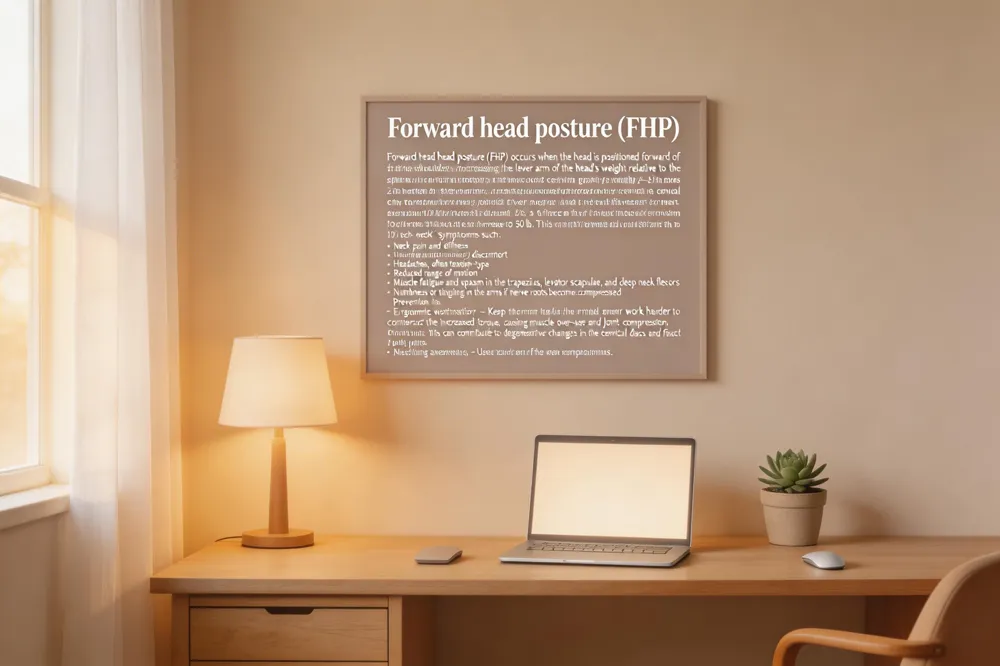 The head, weighing roughly 10–12 pounds, acts like a lever on the cervical spine. When the head tips forward just 1 inch, the load on the neck roughly doubles, and a 15° forward tilt can raise the effective weight to about 27 pounds; at 45°, the strain approaches 50 pounds. This lever effect forces the upper‑back and shoulder muscles to work harder, quickly leading to fatigue and pain.
Tech neck symptoms
Tech neck typically presents with a dull, aching discomfort in the lower neck, shoulders, and upper back that can become sharp or stabbing after prolonged device use. You may notice reduced mobility or stiffness in the neck and upper back, along with headaches that worsen when you tilt your head forward. Tingling, numbness, or radiating pain into the arms and hands can occur due to nerve irritation. Jaw pain or temporomandibular joint discomfort may develop from altered cervical alignment. Finally, the pain often intensifies when you look down at a phone or tablet, especially after many hours of static, forward‑leaning posture.
Long‑term musculoskeletal consequences include chronic cervical disc degeneration, upper‑cross syndrome (tight chest and neck muscles with weakened upper‑back support), reduced thoracic mobility, and even respiratory inefficiency. Persistent forward head posture can also predispose individuals to nerve impingement, facet‑joint arthritis, and balance problems, underscoring the importance of early ergonomic and therapeutic interventions.
2. Building an Ergonomic Foundation
 Chair support is equally vital. Choose a chair that offers firm lumbar support or place a rolled towel behind the lower back to preserve the natural lumbar curve. A lumbar roll encourages the pelvis to stay neutral, allowing the thoracic spine to extend and the neck to stay in a neutral position.
How to improve dynamic posture? Stay mindful of alignment while moving; keep the head over the shoulders, shoulders back, and maintain spinal curves. Strengthen the core with planks, bird‑dogs, or yoga, and change position every 15‑30 minutes with brief walks or stretches.
Counteract forward head posture causes Adjust ergonomics (eye‑level screen, supportive chair), take 20‑20‑20 breaks, and perform neck‑retraction drills (chin tucks) together with chest and upper‑trap stretches. A physical therapist can add manual therapy and individualized exercises to reinforce these habits.
3. Core Dynamic Drill: Chin Tucks & Scapular Retracts
 The core dynamic drill combines chin‑tucks and shoulder‑blade squeezes to counteract tech‑neck.
Tech‑neck hum reduction – Begin seated or standing, draw the chin straight back (keeping the chin level) and hold 5‑10 seconds; repeat 15‑20 times to activate deep cervical flexors. Follow with a scapular squeeze: inhale, then exhale while pulling the shoulder blades together and engaging the core, hold 5 seconds, 12‑15 repetitions. Perform these moves every 30 minutes during screen use to reset posture and flatten the hump.
Best overall tech‑neck routine – Chin‑retraction (double‑chin) 10‑12 times per hour, gentle upper‑trapezius stretch (20‑30 seconds each side), cat‑cow spinal mobilizations, and wall angels or seated thoracic extensions to strengthen upper‑back and open the chest.
Reddit‑recommended quick set – Chin tuck, scapular squeeze, doorway chest stretch, wall angels, and seated thoracic extension; each 5‑10 seconds, 8‑12 reps, done at the desk without equipment.
Home fix for forward head posture – forward head posture – Wall‑based chin tucks (5‑10 seconds, 10‑15 reps), corner pec stretch (30‑60 seconds), and hourly posture checks (ears over shoulders, chin retracted). Adjust monitor to eye level and keep phone at eye height. Consistent micro‑breaks, ergonomic tweaks, and the drill will restore a neutral neck and reduce pain.
4. Thoracic Mobility Series: Wall Angels, Foam‑Roll Extensions & Rotations
 Wall‑angel form cues: stand with back, head, shoulders, elbows, wrists touching the wall; keep knees bent, engage core, slide arms up and down while maintaining contact, avoid arching the lower back.
foam‑roller thoracic extension steps: sit, place foam roller under upper back, cross arms over chest, lift hips, roll gently back and forth 10‑15 reps to open chest and extend thoracic spine.
Standing thoracic rotation drill: feet hip‑width, hands on hips, rotate torso right then left, hips stable, 8‑10 reps each side, breathe evenly.
Dynamic posture exercises at home: perform wall slides, thoracic rotations, and upright lunges for 2‑3 sessions after screen time to improve mobility, reduce tension, support breathing.
Dynamic posture exercises YouTube: channels like Bob & Brad, PhysioU, Athlean‑X show chin tucks, wall angels, and shoulder drills with ergonomic tips. Practice 5‑10 minutes several times daily; see a therapist if pain persists.
Dynamic posture exercises for seniors: begin with wall‑tilt drills, wall‑supported arm circles, light band scapular retractions, and bird‑dog on chair to boost balance, core stability, spinal alignment.
5. Upper‑Back Strengthening Circuit (Gym & Home)
 Improving upper‑back posture begins with strengthening the thoracic extensors and retracting the scapulae. Wall‑angel is the number‑one posture exercise: stand with your back against a wall, elbows bent at 90°, and slide your arms up and down while keeping shoulders, elbows and wrists touching the wall. This low‑impact drill teaches proper scapular retraction, opens the chest and provides instant feedback on alignment.
Row variations and band pull‑aparts – whether seated on a bench, standing with a cable machine, or using a resistance band, pull the elbows straight back and squeeze the shoulder blades together for 10‑15 repetitions. This activates the middle‑ and lower‑trapezius and rhomboids, counteracting the rounded shoulders seen in tech‑neck.
Y‑T‑W‑L series on a bench – lie face‑down on a bench and raise your arms into the shapes of Y, T, W and L, holding each position for 2‑3 seconds. The sequence targets the posterior deltoid, rotator cuff and thoracic stabilizers, promoting a strong, upright upper back.
Integrate these drills into a short circuit (2‑3 sets) 2‑3 times daily, combined with micro‑breaks and ergonomic screen placement, to restore a neutral head‑to‑shoulder alignment and reduce neck strain.
6. Neck Stretching Toolkit for Pain Relief
 A simple home‑based toolkit can ease tech‑neck pain and restore mobility.
Upper trap and levator scapulae release – Sit or stand tall, gently tilt the ear toward the opposite shoulder without raising the shoulder, hold 15‑30 seconds, then switch sides. Follow with a shoulder‑shrug‑and‑roll sequence to melt tension in the upper trapezius and levator scapulae.
Suboccipital flexion stretch – Place a rolled towel behind the neck, gently tuck the chin toward the chest while keeping the back flat, and hold 15‑30 seconds. This lengthens the deep neck extensors that become tight with forward‑head posture.
Gentle cervical rotation and side‑tilt – Slowly turn the head side‑to‑side, then perform ear‑to‑shoulder tilts, holding each position 15‑30 seconds. These moves improve rotational range and counteract the forward tilt.
Quick answers to common questions
- Neck pain exercises at home: Begin with slow rotations, side‑tilts, forward flexion, and light isometric presses; repeat 2‑4 times, holding 5‑10 seconds, and keep pain below 3‑4/10.
- Best stretches for neck pain and tension: Forward‑and‑backward tilt, side‑tilt, chin‑tuck, shoulder rolls, and towel‑pull stretch; perform once or twice daily, breathing freely.
- Neck posture exercises NHS: Chin tucks, side‑flexion, rotation, and gentle flexion/extension; 5‑10 reps per set, pain under 0‑5/10, stop if discomfort persists.
Consistency, micro‑breaks and ergonomic screen height together create lasting relief.
7. Micro‑Breaks, Reminders & Digital Aids
 The 20‑20‑20 rule (every 20 minutes, look 20 feet away for 20 seconds) not only eases eye strain but also prompts a quick micro‑break to reset neck posture. Pair it with a timer or a posture‑check app—such as "Text Neck Indicator" or "Watch Your Neck"—that vibrates when your head flexion exceeds a safe angle, reminding you to roll shoulders, do a chin‑tuck, or stand for a few seconds. Voice‑activated phone usage (Siri, Google Assistant) lets you place the device at eye level without looking down, further reducing forward‑head tilt.
Dynamic posture exercises YouTube – Reputable PT channels (Bob & Brad, PhysioU, Athlean‑X) offer free videos that guide you through chin tucks, wall angels, neck stretches, and shoulder‑shrug drills. Aim for 5‑10 minutes of these moves several times a day, especially after prolonged screen time. If pain persists, schedule a personalized assessment with a licensed therapist at O’Brien Physical Therapy.
8. Professional Tools & Printable Resources
 A forward‑neck‑posture corrector is a lightweight orthotic brace that gently pulls the head back into alignment, reducing the excessive forward tilt that loads the cervical spine. Clinical evidence shows that 15–20 minutes of daily wear, combined with targeted physical‑therapy exercises, can relieve tension in the neck, shoulders and upper back, improve breathing and lessen headache frequency. Before starting a corrector program, a licensed physical therapist can assess your specific needs and ensure a proper fit.
Our clinic offers a free Tech Neck Exercises PDF that outlines step‑by‑step stretches and strengthening drills—chin tucks, shoulder‑blade squeezes and corner chest stretches and core‑activating moves—plus ergonomic tips such as eye‑level screen placement and lumbar support. The guide is designed for two to three daily sessions and can be printed for home use.
We also provide a comprehensive "Posture‑Correction Exercises PDF" that expands the routine to wall angels, thoracic rotations and scapular retractions, complete with recommended sets, holds and frequency. Download both PDFs from our website to empower yourself with a personalized, evidence‑based rehabilitation plan.
9. Long‑Term Lifestyle Integration & Sleep Hygiene
 Core stability and breathing drills are the foundation of lasting postural health. Daily planks, bird‑dogs, and diaphragmatic breathing teach the deep abdominal and lumbar muscles to support the spine, while thoracic extensions on a foam roller keep the upper back mobile enough2 forward‑head posture.
How to permanently fix posture – Begin with awareness: notice slouching or head‑forward positions and correct them immediately. Strengthen deep neck flexors, glutes, and upper‑back with chin tucks, rows, and wall angels; stretch tight chest, hip‑flexors, and hamstrings. Adjust your workstation—lumbar‑support chair, eye‑level monitor, flat feet on the floor—and take micro‑breaks every 20‑30 minutes . A few sessions with a licensed physical therapist personalize the program and ensure proper form, turning good posture into an effortless habit.
Correct forward head posture while sleeping – Choose a pillow that maintains the natural cervical curve: medium‑to‑low height for back sleepers, taller firmer pillows for side sleepers. If needed, add a rolled towel under the neck to fill the shoulder‑ear gap. Avoid stomach sleeping, and periodically check alignment with a partner or phone camera until the head rests directly over the spine.
How to get rid of tech neck lines naturally – Improve posture first: keep screens at eye level, pull shoulders back, and avoid craning. Follow a neck‑skin routine with gentle cleanser, hydrating moisturizer, and actives like retinol, peptides, and hyaluronic acid. Perform chin tucks, neck extensions, and shoulder‑blade squeezes daily to tone underlying muscles. Use a Gua Sha tool or facial roller with oil for lymphatic drainage, and finish with broad‑spectrum sunscreen each morning to protect and smooth the skin.
Putting It All Together
A successful tech‑neck plan hinges on three practical pillars. First, schedule micro‑breaks every 20‑30 minutes: stand, look 20 feet away for 20 seconds, then perform a quick chin‑tuck, shoulder‑blade squeeze, or gentle neck stretch. These brief resets prevent cumulative loading and keep muscles active. Second, track progress objectively. Take a photo of your side profile or use a smartphone app to measure the cranio‑vertebral angle weekly; a modest increase of 3‑5 degrees signals improved alignment. Record any changes in headache frequency or shoulder tightness alongside the visual data. Third, know when to involve a professional. Persistent pain beyond two weeks, numbness, tingling, or worsening headaches, and any loss of range of motion warrant evaluation by a physical therapist or orthopedic spine specialist. Early expert guidance can tailor exercises, address underlying imbalances, and accelerate a pain‑free return to daily activities.