

Why Understanding Pain Matters
Understanding pain begins with the brain, not the injured tissue. Modern research shows that chronic pain reflects the brain’s threat‑assessment circuitry, where central sensitization and neuroplastic changes amplify harmless signals into suffering. By recognizing pain as a brain‑generated output, clinicians can shift from a purely biomedical focus to a biopsychosocial model that also considers emotions, beliefs, and social context. This approach empowers patients to reframe fear, engage in active movement, and use coping strategies that restore normal neural pathways. In La Crosse, where outdoor recreation leads to many musculoskeletal injuries, integrating brain‑focused education with physical therapy helps local athletes and residents break the pain‑avoidance cycle, speeding recovery and reducing reliance on medication. Clinicians tailor programs to each individual’s lifestyle and goals.
Pain Neuroscience Education (PNE) – Foundations and Benefits
 Pain neuroscience education (PNE) teaches patients that pain is a brain‑generated protective signal, not a direct read‑out of tissue damage. The neurophysiology of pain involves nociceptive signals traveling from peripheral receptors to the spinal cord, thalamus, and cortical areas such as the anterior cingulate cortex and insula, where the brain evaluates threat. When the nervous system becomes hyper‑excitable—a state called central sensitization—neutral sensations can be perceived as painful, perpetuating chronic pain even after tissue has healed.
Systematic reviews and meta‑analyses show modest to moderate reductions in pain intensity (average 1–2 points on a 0‑10 scale) and disability when PNE is combined with exercise or manual therapy. Randomized trials report that PNE can lower fear‑avoidance, decrease catastrophizing, and improve self‑efficacy, with number‑needed‑to‑treat values around 3:1 for achieving 50 % pain relief.
In Wisconsin, physical‑therapy clinics such as O’Brien Physical Therapy in La Crosse integrate PNE into personalized treatment plans. By blending education, therapeutic exercise, and manual techniques, they empower patients to rewire maladaptive brain pathways, reduce reliance on opioids, and achieve faster, sustainable functional recovery.
Pain Reprocessing Therapy (PRT) – Teaching the Brain to Unlearn Threat
 Pain Reprocessing Therapy (PRT) is a four‑week intensive program that blends guided movement with emotional‑regulation training to teach patients that pain signals are not threats. The protocol involves daily, supervised exercises that focus on safe, pain‑free motion while patients practice mindfulness and re‑framing statements such as “I am safe” and “This is a false alarm.” In a randomized clinical trial of 151 adults with mild‑to‑moderate chronic low‑back pain of unknown origin, 66 % reported being pain‑free or nearly pain‑free after PRT, compared with 20 % receiving placebo saline injections and 10 % receiving usual care. Functional MRI scans revealed marked reductions in activity within the anterior cingulate cortex, insula, and other pain‑processing regions, indicating durable neuroplastic changes that persisted at one‑year follow‑up.
Pain management physical therapy near me – If you’re looking for pain‑management physical therapy near La Crosse, Wisconsin, O’Brien Physical Therapy offers personalized, evidence‑based treatment to relieve chronic and acute pain. Our licensed therapists use manual therapy, dry needling, instrument‑assisted soft‑tissue mobilization, therapeutic exercise, and modalities such as electrical stimulation and heat to target back, neck, shoulder, knee, ankle and other joint pain. We also provide specialized programs for women’s health, sports rehabilitation, and post‑surgical recovery, all designed to improve function and prevent future injury. Conveniently located at 123 Main Street, La Crosse, WI 54601, we accept most major insurance plans and offer flexible scheduling, including telehealth options. Call (608) 555‑1234 or visit obrienphysicaltherapy.net to book your initial evaluation today.
Scrambler Therapy: Electrical Modulation to Reset Pain Circuits
 Scrambler therapy was approved by the FDA in 2009 and delivers electrical stimulation through the skin using electrodes placed above and below the painful area. The device captures the nervous system’s own pain signals and replaces them with synthetic, harmless signals from adjacent nerves, essentially “scrambling” the brain’s pain circuitry and teaching it that the tissue is safe. This neuro‑re‑training reduces the threat perception that underlies chronic pain.
The United States Food and Drug Administration cleared scrambler therapy in 2009, recognizing it as a safe, non‑invasive option for patients whose pain has not responded adequately to conventional treatments.
Unlike transcutaneous electrical nerve stimulation (TENS), which only provides temporary relief while the current is on, scrambler therapy creates lasting changes in the brain’s inhibitory pathways, often producing pain reductions that persist long after the session ends.
Chronic pain physical therapy near me – O’Brien Physical Therapy in La Crosse, Wisconsin offers specialized, evidence‑based physical therapy for chronic pain right in your community. Our licensed therapists create personalized treatment plans that combine manual therapy, therapeutic exercise, and education to reduce pain and improve functional movement. We treat a wide range of chronic conditions—including back, neck, joint, and neuropathic pain—using a collaborative, whole‑person approach. Conveniently located in downtown La Crosse, we accept most major insurance plans and offer flexible scheduling to fit your lifestyle. Call (608) 555‑1234 or visit obrienphysicaltherapy.net to book your initial evaluation today.
Integrating PNE with Physical Therapy in La Crosse
 In addition to clinical expertise, La Crosse draws on the strong academic foundation of the University of Wisconsin‑La Crosse Doctor of Physical Therapy (DPT) program, which maintains a competitive acceptance rate of roughly 8 %–16 % (e.g., 11.5 % for the Class of 2022 and 13.1 % for the Class of 2023). This rigorous training pipeline ensures that local therapists are well‑versed in neuro‑education, graded exposure, and evidence‑based movement strategies, delivering patient‑centered care that rewires pain pathways and promotes lasting, pain‑free living.
Pre‑Physical Therapy Pathway at UW–La Crosse
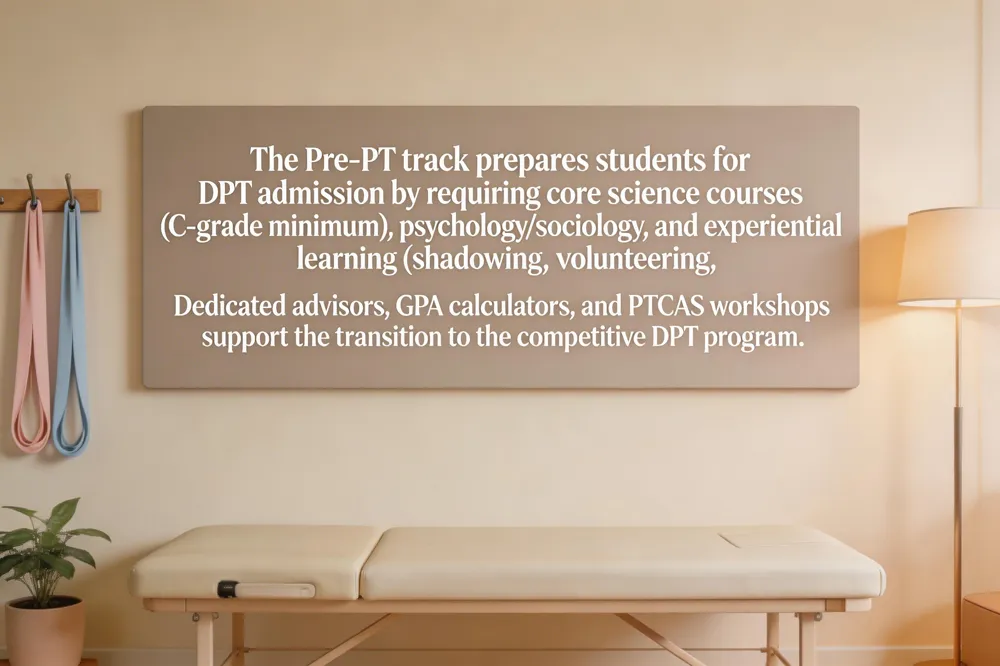 The University of Wisconsin–La Crosse offers a Pre‑Physical Therapy (Pre‑PT) track that serves as a structured, pre‑professional pathway for students aiming to enter a Doctor of Physical Therapy (DPT) program. Pre‑PT track requirements include completing foundational science courses—general biology, anatomy & physiology, chemistry, physics, statistics—as well as psychology or sociology. All courses must be earned with a grade of C or higher from a regionally accredited institution. The track also encourages experiential learning through shadowing licensed PTs, volunteer work, or paid positions in clinical settings. Advising resources are built into the pathway: dedicated advisors help students select a major, map out prerequisite courses, and monitor academic progress using a GPA calculator linked to the Physical Therapist Centralized Application Service (PTCAS). Regular workshops and webinars provide guidance on PTCAS applications, interview preparation, and professional networking. Transition to DPT is streamlined once the prerequisite bundle is completed; graduates are well‑prepared both academically and clinically for the competitive DPT admission process. The Pre‑PT track equips students with the knowledge, experience, and support needed to pursue a rewarding career in physical therapy.
Neuroplasticity in Action – From Theory to Everyday Practice
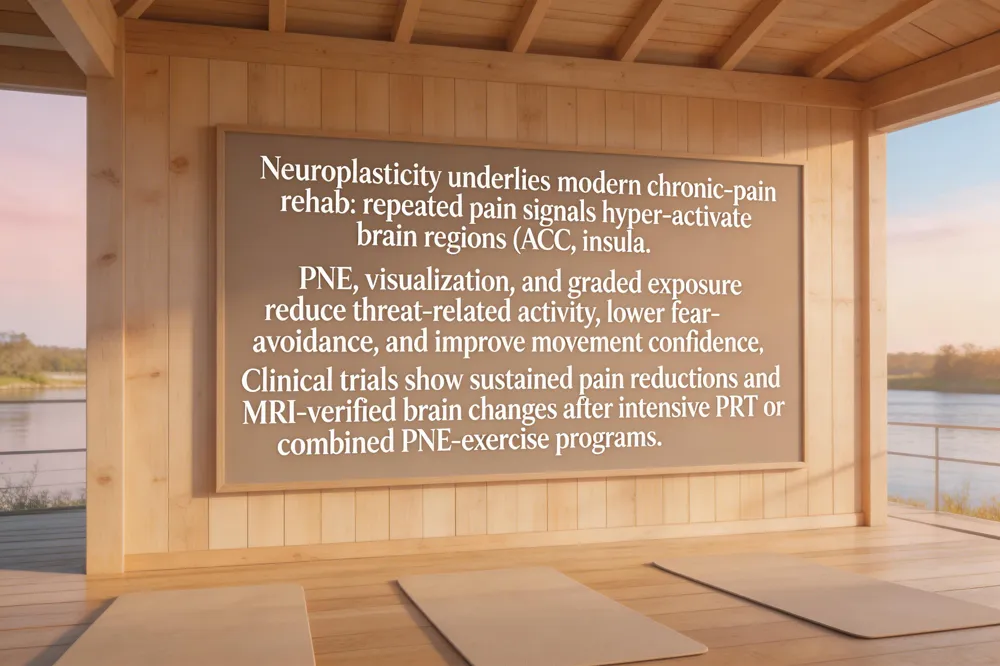 Neuroplasticity is the brain’s ability to reorganize its wiring in response to experience, and it lies at the heart of modern chronic‑pain rehabilitation. When pain signals fire repeatedly, the brain’s pain‑processing circuits—especially the anterior cingulate cortex, insula, and prefrontal regions—become hyper‑active, a phenomenon documented by functional MRI in both pain‑reprocessing therapy (PRT) and pain‑neuroscience education (PNE) studies. By teaching patients that pain is a brain‑generated threat signal rather than a direct read‑out of tissue damage, PNE and the maladaptive “alarm” narrative and reduces threat‑related activity in these regions.
Visualization and graded exposure build on this neuroplastic foundation. Mental rehearsal of movement activates the same cortical pathways as actual motion, allowing patients to “rewire” pain maps without overstimulating the nervous system. Therapists pair visual metaphors (e.g., an oversensitive alarm clock) with step‑by‑step exposure to feared activities, gradually increasing intensity and range. This approach has been shown to lower fear‑avoidance beliefs, improve movement confidence, and produce measurable drops in pain intensity after a single 70‑minute PNE session.
Long‑term brain changes follow when these cognitive‑behavioral and movement strategies are reinforced over weeks to months. In a randomized trial of four weeks of intensive PRT, 66 % of participants reported being pain‑free or nearly pain‑free, and MRI scans revealed sustained reductions in activity within the anterior cingulate and insular cortex at one‑year follow‑up—evidence that the brain’s pain circuitry can be permanently “reset.” Similarly, meta‑analyses of PNE combined with exercise report moderate to large improvements in pain and disability that persist for at least 12 months when patients continue graded exposure and self‑management. Together, neuroplastic mechanisms, visualization, and graded exposure provide a practical, evidence‑based roadmap for turning the science of brain rewiring into everyday relief for chronic‑pain sufferers.
Your Path to Brain‑Based Pain Relief
Taking the first step toward brain‑based pain relief starts with a brief assessment at our La Crosse clinic. Our physical therapists explain that chronic pain often stems from central sensitisation and that pain‑reprocessing therapy (PRT) or pain‑neuroscience education (PNE) can “rewire” pain pathways through guided movement, emotional‑regulation and simple metaphors. You will receive a personalized plan that may include four‑hour PNE sessions, graded exercise and, if appropriate, scrambler therapy—supported by NIH‑funded research showing lasting reductions in pain and brain activity. To schedule an appointment, call (608) 555‑1234 or visit www.obrientherapy.com. We are committed to community workshops that keep you informed about emerging neuro‑imaging and closed‑loop neuromodulation for future pain care. Our multidisciplinary team also offers tele‑rehabilitation options for convenient, home‑based follow‑up and support.